Symmetria is a demo theme for AstroBaaS. Treatments, prices, the team, free appointments and the journal come from a live CMS. The clinic and everyone in it are invented.All demos

Open Monday to Friday 07:00 to 21:00, Saturday 08:00 to 14:00.

+30 210 000 7516

SymmetriaPhysiotherapy in PangratiBook

Pregnancy and after birth

Pelvic girdle pain in pregnancy, recovery after birth, the gap in the tummy muscles, and getting back to exercise.

What it usually feels like

Pain at the front of the pelvis or in the buttocks when walking, turning in bed or on the stairs. After birth: a weak or unfamiliar body, and not being sure what is safe.

How long it usually takes

It depends on what you want to get back to. Most plans run for a few months, with sessions every two or three weeks.

What helps

In pregnancy: advice, hands-on treatment and exercise to keep you moving comfortably, and sometimes a support belt. After birth: a check at around six weeks, or whenever you are ready, then a plan that rebuilds the pelvic floor and tummy muscles and gets you back to what you enjoy.

We usually start with pelvic health physiotherapy, 60 minutes, €65.

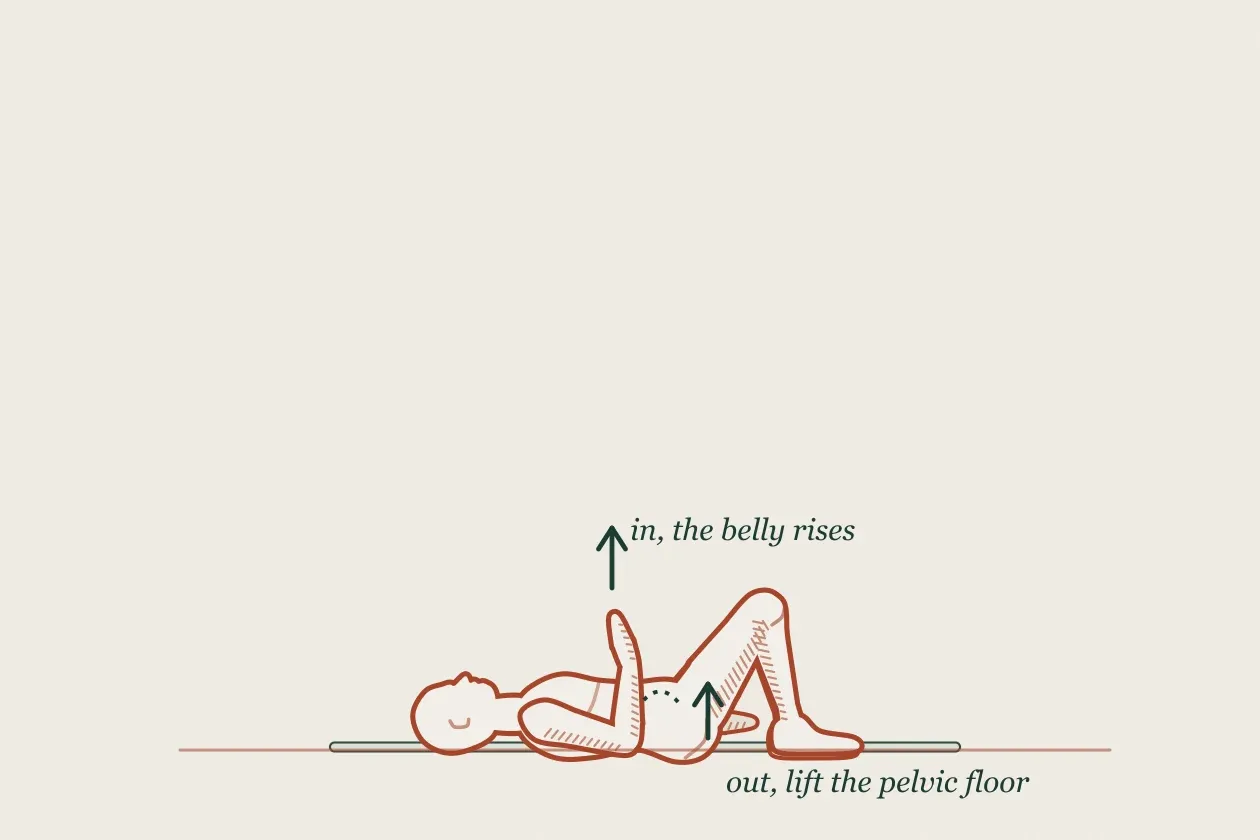
Something to start with at home

Exercise drawing: a figure lying with knees bent and a hand on the belly, with arrows for breathing in and out

Breathing with the pelvic floor

  1. Lie on your back with knees bent, one hand on your belly.
  2. Breathe in slowly and let the belly and the pelvic floor relax and widen.
  3. Breathe out and gently lift the pelvic floor, as if stopping wind, and let the lower tummy draw in.
  4. Relax completely before the next breath.

10 breaths, twice a day. In the weeks after birth, start whenever it feels comfortable.
Leaking when you run or jump

Very common, and not something you have to live with. Most people improve a lot with the right exercise.

What it usually feels like

A leak when you cough, sneeze, laugh, jump or run. Sometimes a sudden urge that you cannot hold.

How long it usually takes

Most people notice a difference in six to eight weeks and continue to improve for three to six months.

What helps

An assessment of how your pelvic floor is working, which for most people is the first time anyone has checked. Then a training plan, built up the way any other muscle is trained, until it copes with running and jumping.

We usually start with pelvic health physiotherapy, 60 minutes, €65.

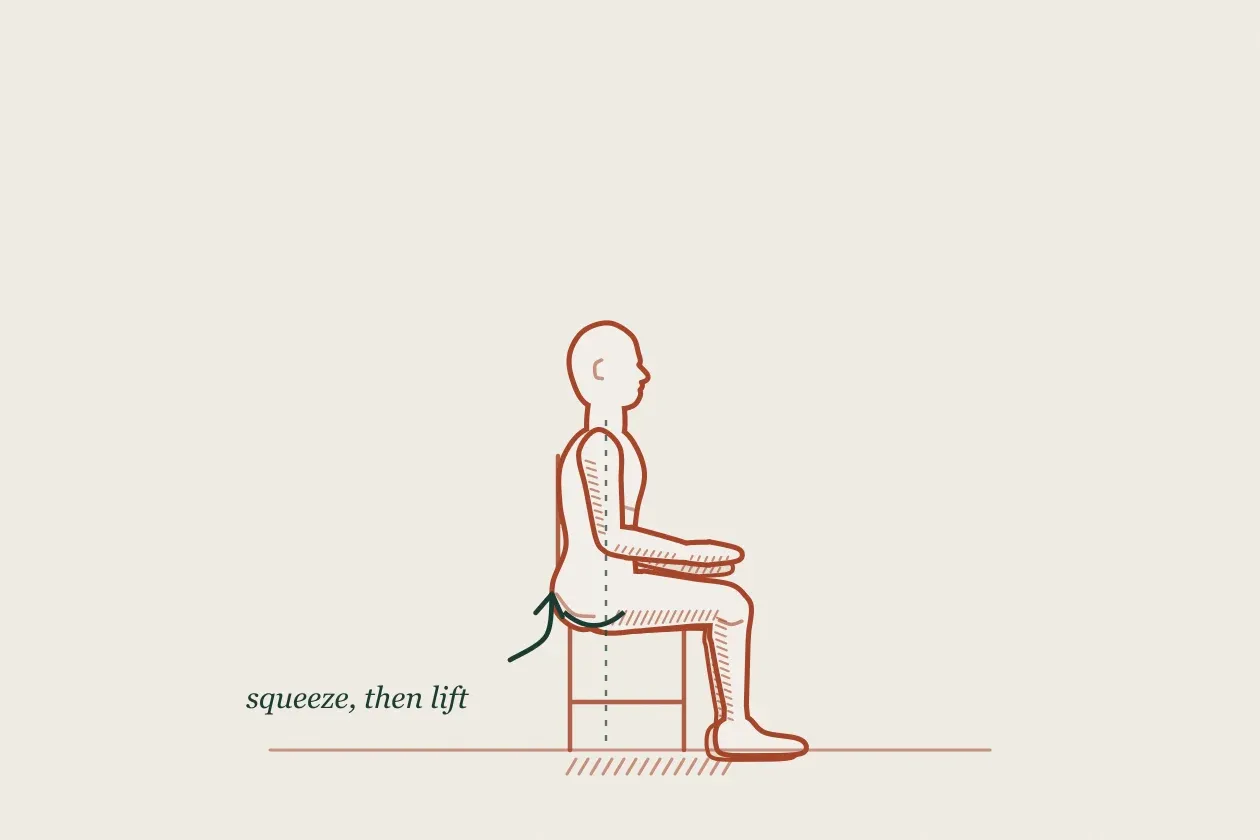
Something to start with at home

Exercise drawing: a figure sitting upright on a chair, with a small curved arrow lifting under the pelvis

Squeeze and lift

  1. Sit upright on a firm chair, feet flat.
  2. Squeeze around the back passage and the front passage, then lift, as if stopping wind and the flow of urine.
  3. Hold for up to ten seconds while breathing normally.
  4. Let go completely and rest for ten seconds.

10 long holds and 10 quick squeezes, three times a day.

Not sure this is you? Most people are not a textbook case. Book a first assessment and we will find out together.

Next: Knee